The AI Bubble Will Burst. The Real Winners Will Come After.
What 200 years of technological revolutions tell us about the companies and leaders that will succeed in the AI era.

I was a history major in college, which, depending on your perspective, either demonstrates a lifelong intellectual curiosity or an early naivety about the realities of financial independence. I've always believed that the past is prologue, and that understanding history is essential not just to making sense of the present, but to being an informed citizen. Sometime around my senior year at Colgate, I had a slightly less intellectual revelation: if I continued down my chosen path, there was a very real possibility I'd spend the next 40 years in the London war archives analyzing primary documents, only to die alone, surrounded by dusty letters from Air Marshal Hugh Dowding to Winston Churchill, blissfully unaware that I'd missed out on having a social life.
So I went into business instead. But my fascination with history never went away, particularly the tendency of successive generations to convince themselves that whatever they're experiencing is entirely unprecedented.
Consider Britain in 1845. Investors were pouring extraordinary sums into companies promising to transform transportation, commerce, and economic life. New ventures appeared seemingly overnight, fortunes were being made, and anyone questioning the frenzy risked being dismissed as someone who didn't understand the future.
The technology was the railroad, and the enthusiasts were right about its potential. Railroads would fundamentally reshape economies, connect markets, and help usher in an entirely new industrial age. Unfortunately, many investors were spectacularly wrong about the economics. Railway Mania ended in a financial collapse that destroyed fortunes and left behind failed ventures, even as the resulting infrastructure helped transform the British economy for generations.
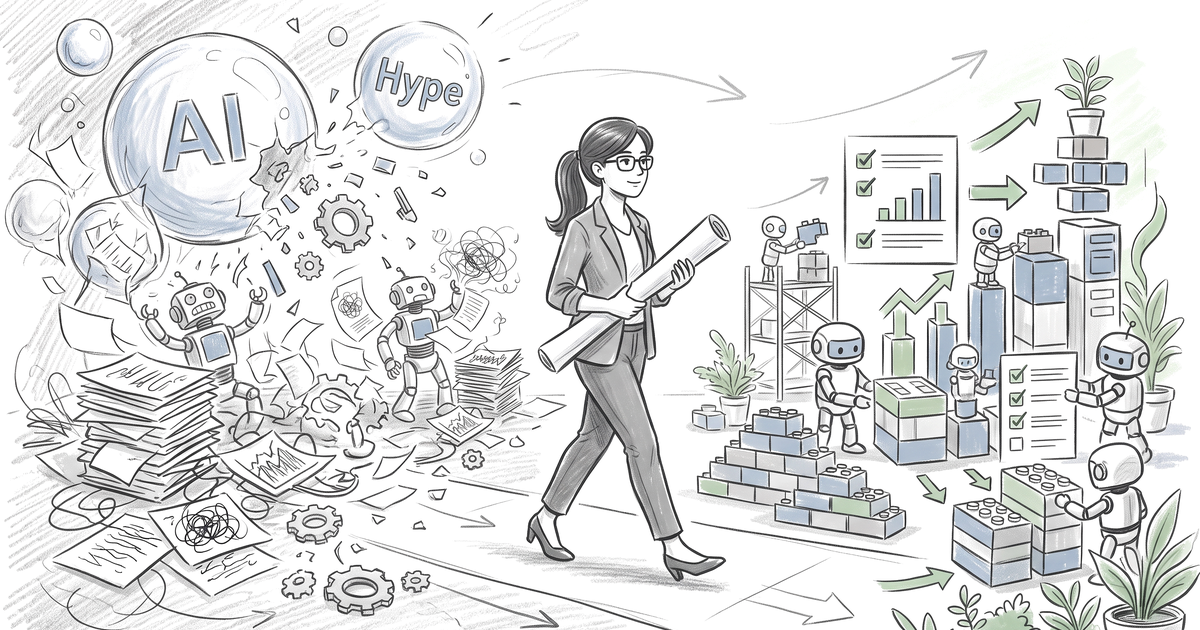
Nearly two centuries later, artificial intelligence is undoubtedly revolutionary, but the economic forces surrounding it are remarkably familiar. History suggests that the greatest commercial opportunities may not belong to those leading the current investment frenzy, but to those best prepared for what comes afterward.
We've Seen This Movie Before
The history of transformative technologies is littered with financial wreckage. In the early 19th century, canals attracted enormous investment as entrepreneurs and governments raced to connect markets. Many projects delivered lasting economic benefits; others failed, leaving investors and governments with crushing debts.
More than a century later, we witnessed much the same phenomenon with the internet. During the late 1990s, telecommunications companies invested staggering sums laying fiber-optic cable in anticipation of explosive demand. When the dot-com bubble collapsed, many went bankrupt, investors absorbed heavy losses, and much of that capacity initially sat unused. But the infrastructure remained, eventually helping support a generation of highly successful digital businesses.
Economic historian Carlota Perez has spent decades studying this pattern. In Technological Revolutions and Financial Capital, she describes how major technological breakthroughs often move through an initial period of speculative investment and infrastructure development, followed by financial upheaval and widespread commercial adoption.
Perez distinguishes between the installation phase, when capital races to build the future, and the deployment phase, when businesses figure out how to put that infrastructure to productive use. Not every revolution follows the same timetable, but the distinction matters. The companies that finance a new technology aren't necessarily the ones that ultimately capture its economic value.
AI: A Familiar Investment Frenzy
In an October 16, 2026 episode of The Ezra Klein Show, venture capitalist and MIT fellow Paul Kedrosky made a compelling case that today's AI investment boom bears many hallmarks of earlier infrastructure bubbles. His argument is that when a transformative technology emerges, competitors feel compelled to invest aggressively because the perceived cost of being left behind exceeds the risk of spending too much.
Each company may be acting rationally, but collectively their decisions can create massive overcapacity. Railroad companies built redundant routes, telecommunications companies installed more fiber than the market initially needed, and today's technology giants are racing to build data centers, secure power supplies, and acquire increasingly sophisticated chips.
Kedrosky made a particularly chilling observation about the potential consequences of an AI bubble bursting. By his estimate, roughly half of American household wealth is tied to equities. Meanwhile, the stock market has become increasingly dependent on a handful of technology companies benefiting from the AI boom. According to Goldman Sachs, the largest technology stocks accounted for 53% of the S&P 500's total return in 2025, fueled in part by AI investment.
Consider the implications. An enormous portion of American wealth is exposed, directly or indirectly, to the fortunes of a relatively small group of companies whose valuations increasingly depend on AI delivering on its promise. And that concentration could become even more extreme.
Kedrosky highlighted the anticipated public offerings of OpenAI and Anthropic, alongside the sheer scale of SpaceX, asserting that the three companies' combined valuations could exceed those of every IPO since World War II. While that broader comparison is difficult to substantiate, a narrower one is remarkable enough: their potential combined valuations could exceed the total IPO-day value of more than 3,300 U.S. technology companies that went public between 1980 and 2025.
If the AI bubble bursts, it won't just be Silicon Valley venture capitalists taking a haircut. Millions of Americans could watch years of retirement savings disappear, with the resulting decline in household wealth rippling through consumer spending, business investment, and employment. What begins as a technology correction could become a much broader economic crisis.
There's another, somewhat less uplifting lesson from American economic history. When speculative industries overextend themselves, the aftermath doesn't always look much like the free-market competition that got them there. Bankruptcies and consolidation can leave a handful of dominant players exercising outsized market power, often accompanied by assurances that they can regulate themselves. Meanwhile, moral hazard has a remarkable tendency to flourish when the downside becomes someone else's problem. Apparently, capitalism works best when the profits are private and the losses can be shared.
We'll likely hear a familiar argument if the AI boom ends badly. Companies that spent vast sums racing to build infrastructure may suddenly find themselves too strategically important to fail. The clarion call for government intervention won't necessarily be about saving shareholders; it will be about national security, with the specter of Chinese frontier models overtaking American capabilities invoked to justify financial support. There are legitimate national security considerations here, but the distinction between protecting a strategically important technology and rescuing investors from bad decisions could become awfully convenient to blur.
None of this is an argument for welcoming a crash. Financial bubbles can cause tremendous hardship, often for people who had little to do with creating them. But the historical paradox remains: a revolutionary technology can create extraordinary long-term economic value while destroying much of the capital initially invested in it.
The Next Winners May Be Different
The fiber-optic boom offers a useful preview of what could happen with AI. As infrastructure becomes more abundant and affordable, the competitive advantage shifts from owning or building the technology to knowing how to put it to work.
After the dot-com collapse, Amazon was among the companies that survived and went on to define the internet era. Its success wasn't simply about having access to the internet. It was about understanding customers, building a world-class operating model, and using the technology to create a better business.
AI could produce a similar shift. If powerful models and computing become widely accessible, companies whose primary advantage is access to AI may find themselves competing with businesses that have similar capabilities at a fraction of the cost. The winners will need something more durable: differentiated products, superior customer relationships, better economics, and the organizational ability to execute.
And that raises a question I think CEOs and boards should be asking now, rather than after the market changes: are we recruiting the leaders who succeeded in the last era, or those equipped to win in the next?
Are We Hiring Leaders for the Wrong Era?
Every economic environment rewards certain leadership capabilities. When capital is plentiful and companies are rewarded for rapid expansion, it makes sense to hire executives who can establish categories, build large organizations, capture market share, and accelerate revenue growth.
Those are valuable skills, but they may not be the ones that matter most as AI changes the economics of sales and marketing. Prospecting, content creation, customer analysis, and campaign execution are becoming increasingly automated. The next generation of successful GTM executives will need to rethink how commercial organizations operate, rather than simply use AI to make existing processes more efficient.
Consider a CRO who scaled a business to $500 million in revenue by building a large sales organization. It's an impressive accomplishment, but does it tell us whether that executive can redesign a sales model in which AI fundamentally changes customer acquisition economics? Or consider a CMO who built a category-leading brand with a $50 million marketing budget. Will those same capabilities translate into a world where competitors can produce sophisticated content and campaigns at a fraction of yesterday's cost?
Perhaps they will. Great leaders adapt, and experience remains enormously valuable. But too often, boards and CEOs confuse an impressive track record with proof that an executive can succeed under fundamentally different conditions.
I suspect one of the great ironies of AI will be that as technical capabilities become more widely available, distinctly human commercial skills become more valuable. Customer understanding, strategic judgment, creativity, organizational leadership, and the ability to recognize which opportunities are worth pursuing will matter most when everyone has access to similar tools.
The premium may shift away from executives who are exceptionally good at managing the machinery of growth and toward those who are exceptionally good at determining how growth should be created.
This presents a particular challenge for boards and executive search firms, which understandably rely heavily on proven track records. The CRO who helped scale a business from $100 million to $1 billion will always attract attention. But the résumé rarely tells the whole story. How much of that success came from the executive's judgment and leadership, and how much reflected abundant capital, favorable market conditions, or simply being in the right place at the right time?
At RevelOne, we see every day how much executive success depends on matching capabilities with a company's market, business model, and stage of growth. AI will make that assessment more important, not less. The next generation of successful GTM leaders will need technological fluency, but also the judgment to recognize when established business models and operating assumptions no longer make sense.
Opportunity on the Other Side
History suggests that periods of financial disruption can create opportunities for companies with strong balance sheets and clear strategies. They can invest while competitors retreat, acquire assets at more rational prices, and recruit talented executives who might previously have been unavailable.
Having built a business from the ground up to 300 employees in the aftermath of the 2008 financial crisis, I experienced firsthand how economic uncertainty can create rare opportunities to attract talent that would be far harder to recruit during a boom.
An AI-related correction could create a similarly interesting talent market. Some exceptionally capable executives will inevitably emerge from companies that raised significant capital but failed to develop sustainable business models. Others may find themselves available simply because the economics of their industries changed.
Some of the best executives I've worked with came from companies that did nearly everything right, only to be whipsawed by a Google or Meta algorithm change. Their companies' struggles weren't necessarily a reflection of their abilities. In many cases, those experiences made them better leaders, more adaptable, commercially disciplined, and acutely aware of how quickly a successful business model can become obsolete.
The opportunity won't simply come from hiring impressive résumés at lower prices. It will come from distinguishing between executives who benefited from favorable conditions and those whose capabilities will remain valuable when the conditions change. And companies don't need to wait for a correction to start making those distinctions.
What History Tells Us
I don't know whether AI valuations will collapse next month, in one year, five years from now, or whether the technology will create sufficient economic value to sustain today's extraordinary investment. Well, I think I do, but my track record on predicting market timing has always been a bit spotty.
History isn't a crystal ball, but it does offer a useful warning. The companies that capture the greatest long-term value from technological revolutions aren't necessarily those that invested the most in building the infrastructure. Likewise, the leaders who thrive during an investment boom may not be the ones best equipped to compete when the economics change.
For CEOs and boards, the practical response starts with defining the challenges a new leader will actually face. Where must the business improve its economics? Which assumptions about customers, competition, and organizational structure need to be challenged? And what will the executive need to do differently from what made them successful before?
At RevelOne, we make those questions part of the assessment. We design working session prompts for all finalists, grounded in the company's specific business challenges. These exercises move the conversation beyond what candidates have accomplished to how they would approach the decisions ahead: where they would invest, what they would stop doing, how they would use AI, and how they would organize a team to deliver results.
The presentation itself is only part of the assessment. A polished deck can obscure weak thinking. Our approach sets the stage for the initial presentation to turn into a fruitful working session. This gives the hiring team a consistent basis for evaluating the quality of a candidate's diagnosis, the assumptions behind their recommendations, the tradeoffs they recognize, how they respond when challenged, and what it’s like to work with them in a meeting on core business issues. Those discussions help reveal whether an executive can adapt an established playbook, or recognize when a different one is needed, or perhaps isn’t the best person for the challenge at hand.
Combined with rigorous interviews and references that examine the candidate's personal contribution to past results, this approach provides a fuller picture of both achievement and adaptability. Experience still matters. The responsibility is to understand why someone succeeded, and whether that judgment will translate to the business or function they are being hired to lead.
Sources and Further Reading
- Paul Kedrosky and Azeem Azhar, "Is There an A.I. Bubble? A Debate." The Ezra Klein Show, October 16, 2026.
- Carlota Perez, Technological Revolutions and Financial Capital: The Dynamics of Bubbles and Golden Ages. Edward Elgar, 2002.
- Goldman Sachs Research, "The S&P 500 Is Expected to Rally 12% This Year," January 2026.
- Financial Times, "Has AI Broken the Old VC Model?" September 2026.
- Federal Reserve Bank of New York, "Crisis Chronicles: Railway Mania, the Hungry Forties, and the Commercial Crisis of 1847."
John Levisay is SVP, Growth & Talent at RevelOne, an executive search and talent advisory firm focused exclusively on go-to-market leadership. Previously, he served as CEO of Craftsy/Bluprint and The Pro's Closet and held executive roles at eBay, HomeAdvisor, and NBCUniversal.

About RevelOne
RevelOne is a specialized go-to-market search & advisory partner that drives Growth through People. Growth strategy and talent strategy are completely intertwined, yet often handled by different people. We staff projects with expertise across both to support our clients in sharpening their growth plans and ensuring they have the right full-time and part-time talent to achieve their specific goals.
Over the past 10+ years, we’ve successfully placed 2,000 people at over 750 clients, including both tech companies and traditional companies looking for modern GTM leaders. Over 50 of these clients are now unicorns.
Our GTM retained search practice focuses on Marketing, Sales, Client Success, and Partnerships/BD permanent hires for all levels, from executives to directors, managers, and team buildouts. We can also source temporary hires – pre-vetted GTM experts – for strategy and execution on interim, part-time, or project-based engagements.
Contact: Have a GTM question, a new hire, or a problem you’d like to solve? Reach out to RevelOne today to discuss: jlevisay@revel-one.com
Related Resources


The AI Bubble Will Burst. The Real Winners Will Come After.
What 200 years of technological revolutions tell us about the companies and leaders that will succeed in the AI era.
I was a history major in college, which, depending on your perspective, either demonstrates a lifelong intellectual curiosity or an early naivety about the realities of financial independence. I've always believed that the past is prologue, and that understanding history is essential not just to making sense of the present, but to being an informed citizen. Sometime around my senior year at Colgate, I had a slightly less intellectual revelation: if I continued down my chosen path, there was a very real possibility I'd spend the next 40 years in the London war archives analyzing primary documents, only to die alone, surrounded by dusty letters from Air Marshal Hugh Dowding to Winston Churchill, blissfully unaware that I'd missed out on having a social life.
So I went into business instead. But my fascination with history never went away, particularly the tendency of successive generations to convince themselves that whatever they're experiencing is entirely unprecedented.
Consider Britain in 1845. Investors were pouring extraordinary sums into companies promising to transform transportation, commerce, and economic life. New ventures appeared seemingly overnight, fortunes were being made, and anyone questioning the frenzy risked being dismissed as someone who didn't understand the future.
The technology was the railroad, and the enthusiasts were right about its potential. Railroads would fundamentally reshape economies, connect markets, and help usher in an entirely new industrial age. Unfortunately, many investors were spectacularly wrong about the economics. Railway Mania ended in a financial collapse that destroyed fortunes and left behind failed ventures, even as the resulting infrastructure helped transform the British economy for generations.
Nearly two centuries later, artificial intelligence is undoubtedly revolutionary, but the economic forces surrounding it are remarkably familiar. History suggests that the greatest commercial opportunities may not belong to those leading the current investment frenzy, but to those best prepared for what comes afterward.
We've Seen This Movie Before
The history of transformative technologies is littered with financial wreckage. In the early 19th century, canals attracted enormous investment as entrepreneurs and governments raced to connect markets. Many projects delivered lasting economic benefits; others failed, leaving investors and governments with crushing debts.
More than a century later, we witnessed much the same phenomenon with the internet. During the late 1990s, telecommunications companies invested staggering sums laying fiber-optic cable in anticipation of explosive demand. When the dot-com bubble collapsed, many went bankrupt, investors absorbed heavy losses, and much of that capacity initially sat unused. But the infrastructure remained, eventually helping support a generation of highly successful digital businesses.
Economic historian Carlota Perez has spent decades studying this pattern. In Technological Revolutions and Financial Capital, she describes how major technological breakthroughs often move through an initial period of speculative investment and infrastructure development, followed by financial upheaval and widespread commercial adoption.
Perez distinguishes between the installation phase, when capital races to build the future, and the deployment phase, when businesses figure out how to put that infrastructure to productive use. Not every revolution follows the same timetable, but the distinction matters. The companies that finance a new technology aren't necessarily the ones that ultimately capture its economic value.
AI: A Familiar Investment Frenzy
In an October 16, 2026 episode of The Ezra Klein Show, venture capitalist and MIT fellow Paul Kedrosky made a compelling case that today's AI investment boom bears many hallmarks of earlier infrastructure bubbles. His argument is that when a transformative technology emerges, competitors feel compelled to invest aggressively because the perceived cost of being left behind exceeds the risk of spending too much.
Each company may be acting rationally, but collectively their decisions can create massive overcapacity. Railroad companies built redundant routes, telecommunications companies installed more fiber than the market initially needed, and today's technology giants are racing to build data centers, secure power supplies, and acquire increasingly sophisticated chips.
Kedrosky made a particularly chilling observation about the potential consequences of an AI bubble bursting. By his estimate, roughly half of American household wealth is tied to equities. Meanwhile, the stock market has become increasingly dependent on a handful of technology companies benefiting from the AI boom. According to Goldman Sachs, the largest technology stocks accounted for 53% of the S&P 500's total return in 2025, fueled in part by AI investment.
Consider the implications. An enormous portion of American wealth is exposed, directly or indirectly, to the fortunes of a relatively small group of companies whose valuations increasingly depend on AI delivering on its promise. And that concentration could become even more extreme.
Kedrosky highlighted the anticipated public offerings of OpenAI and Anthropic, alongside the sheer scale of SpaceX, asserting that the three companies' combined valuations could exceed those of every IPO since World War II. While that broader comparison is difficult to substantiate, a narrower one is remarkable enough: their potential combined valuations could exceed the total IPO-day value of more than 3,300 U.S. technology companies that went public between 1980 and 2025.
If the AI bubble bursts, it won't just be Silicon Valley venture capitalists taking a haircut. Millions of Americans could watch years of retirement savings disappear, with the resulting decline in household wealth rippling through consumer spending, business investment, and employment. What begins as a technology correction could become a much broader economic crisis.
There's another, somewhat less uplifting lesson from American economic history. When speculative industries overextend themselves, the aftermath doesn't always look much like the free-market competition that got them there. Bankruptcies and consolidation can leave a handful of dominant players exercising outsized market power, often accompanied by assurances that they can regulate themselves. Meanwhile, moral hazard has a remarkable tendency to flourish when the downside becomes someone else's problem. Apparently, capitalism works best when the profits are private and the losses can be shared.
We'll likely hear a familiar argument if the AI boom ends badly. Companies that spent vast sums racing to build infrastructure may suddenly find themselves too strategically important to fail. The clarion call for government intervention won't necessarily be about saving shareholders; it will be about national security, with the specter of Chinese frontier models overtaking American capabilities invoked to justify financial support. There are legitimate national security considerations here, but the distinction between protecting a strategically important technology and rescuing investors from bad decisions could become awfully convenient to blur.
None of this is an argument for welcoming a crash. Financial bubbles can cause tremendous hardship, often for people who had little to do with creating them. But the historical paradox remains: a revolutionary technology can create extraordinary long-term economic value while destroying much of the capital initially invested in it.
The Next Winners May Be Different
The fiber-optic boom offers a useful preview of what could happen with AI. As infrastructure becomes more abundant and affordable, the competitive advantage shifts from owning or building the technology to knowing how to put it to work.
After the dot-com collapse, Amazon was among the companies that survived and went on to define the internet era. Its success wasn't simply about having access to the internet. It was about understanding customers, building a world-class operating model, and using the technology to create a better business.
AI could produce a similar shift. If powerful models and computing become widely accessible, companies whose primary advantage is access to AI may find themselves competing with businesses that have similar capabilities at a fraction of the cost. The winners will need something more durable: differentiated products, superior customer relationships, better economics, and the organizational ability to execute.
And that raises a question I think CEOs and boards should be asking now, rather than after the market changes: are we recruiting the leaders who succeeded in the last era, or those equipped to win in the next?
Are We Hiring Leaders for the Wrong Era?
Every economic environment rewards certain leadership capabilities. When capital is plentiful and companies are rewarded for rapid expansion, it makes sense to hire executives who can establish categories, build large organizations, capture market share, and accelerate revenue growth.
Those are valuable skills, but they may not be the ones that matter most as AI changes the economics of sales and marketing. Prospecting, content creation, customer analysis, and campaign execution are becoming increasingly automated. The next generation of successful GTM executives will need to rethink how commercial organizations operate, rather than simply use AI to make existing processes more efficient.
Consider a CRO who scaled a business to $500 million in revenue by building a large sales organization. It's an impressive accomplishment, but does it tell us whether that executive can redesign a sales model in which AI fundamentally changes customer acquisition economics? Or consider a CMO who built a category-leading brand with a $50 million marketing budget. Will those same capabilities translate into a world where competitors can produce sophisticated content and campaigns at a fraction of yesterday's cost?
Perhaps they will. Great leaders adapt, and experience remains enormously valuable. But too often, boards and CEOs confuse an impressive track record with proof that an executive can succeed under fundamentally different conditions.
I suspect one of the great ironies of AI will be that as technical capabilities become more widely available, distinctly human commercial skills become more valuable. Customer understanding, strategic judgment, creativity, organizational leadership, and the ability to recognize which opportunities are worth pursuing will matter most when everyone has access to similar tools.
The premium may shift away from executives who are exceptionally good at managing the machinery of growth and toward those who are exceptionally good at determining how growth should be created.
This presents a particular challenge for boards and executive search firms, which understandably rely heavily on proven track records. The CRO who helped scale a business from $100 million to $1 billion will always attract attention. But the résumé rarely tells the whole story. How much of that success came from the executive's judgment and leadership, and how much reflected abundant capital, favorable market conditions, or simply being in the right place at the right time?
At RevelOne, we see every day how much executive success depends on matching capabilities with a company's market, business model, and stage of growth. AI will make that assessment more important, not less. The next generation of successful GTM leaders will need technological fluency, but also the judgment to recognize when established business models and operating assumptions no longer make sense.
Opportunity on the Other Side
History suggests that periods of financial disruption can create opportunities for companies with strong balance sheets and clear strategies. They can invest while competitors retreat, acquire assets at more rational prices, and recruit talented executives who might previously have been unavailable.
Having built a business from the ground up to 300 employees in the aftermath of the 2008 financial crisis, I experienced firsthand how economic uncertainty can create rare opportunities to attract talent that would be far harder to recruit during a boom.
An AI-related correction could create a similarly interesting talent market. Some exceptionally capable executives will inevitably emerge from companies that raised significant capital but failed to develop sustainable business models. Others may find themselves available simply because the economics of their industries changed.
Some of the best executives I've worked with came from companies that did nearly everything right, only to be whipsawed by a Google or Meta algorithm change. Their companies' struggles weren't necessarily a reflection of their abilities. In many cases, those experiences made them better leaders, more adaptable, commercially disciplined, and acutely aware of how quickly a successful business model can become obsolete.
The opportunity won't simply come from hiring impressive résumés at lower prices. It will come from distinguishing between executives who benefited from favorable conditions and those whose capabilities will remain valuable when the conditions change. And companies don't need to wait for a correction to start making those distinctions.
What History Tells Us
I don't know whether AI valuations will collapse next month, in one year, five years from now, or whether the technology will create sufficient economic value to sustain today's extraordinary investment. Well, I think I do, but my track record on predicting market timing has always been a bit spotty.
History isn't a crystal ball, but it does offer a useful warning. The companies that capture the greatest long-term value from technological revolutions aren't necessarily those that invested the most in building the infrastructure. Likewise, the leaders who thrive during an investment boom may not be the ones best equipped to compete when the economics change.
For CEOs and boards, the practical response starts with defining the challenges a new leader will actually face. Where must the business improve its economics? Which assumptions about customers, competition, and organizational structure need to be challenged? And what will the executive need to do differently from what made them successful before?
At RevelOne, we make those questions part of the assessment. We design working session prompts for all finalists, grounded in the company's specific business challenges. These exercises move the conversation beyond what candidates have accomplished to how they would approach the decisions ahead: where they would invest, what they would stop doing, how they would use AI, and how they would organize a team to deliver results.
The presentation itself is only part of the assessment. A polished deck can obscure weak thinking. Our approach sets the stage for the initial presentation to turn into a fruitful working session. This gives the hiring team a consistent basis for evaluating the quality of a candidate's diagnosis, the assumptions behind their recommendations, the tradeoffs they recognize, how they respond when challenged, and what it’s like to work with them in a meeting on core business issues. Those discussions help reveal whether an executive can adapt an established playbook, or recognize when a different one is needed, or perhaps isn’t the best person for the challenge at hand.
Combined with rigorous interviews and references that examine the candidate's personal contribution to past results, this approach provides a fuller picture of both achievement and adaptability. Experience still matters. The responsibility is to understand why someone succeeded, and whether that judgment will translate to the business or function they are being hired to lead.
Sources and Further Reading
- Paul Kedrosky and Azeem Azhar, "Is There an A.I. Bubble? A Debate." The Ezra Klein Show, October 16, 2026.
- Carlota Perez, Technological Revolutions and Financial Capital: The Dynamics of Bubbles and Golden Ages. Edward Elgar, 2002.
- Goldman Sachs Research, "The S&P 500 Is Expected to Rally 12% This Year," January 2026.
- Financial Times, "Has AI Broken the Old VC Model?" September 2026.
- Federal Reserve Bank of New York, "Crisis Chronicles: Railway Mania, the Hungry Forties, and the Commercial Crisis of 1847."
John Levisay is SVP, Growth & Talent at RevelOne, an executive search and talent advisory firm focused exclusively on go-to-market leadership. Previously, he served as CEO of Craftsy/Bluprint and The Pro's Closet and held executive roles at eBay, HomeAdvisor, and NBCUniversal.
About RevelOne
RevelOne is a specialized go-to-market search & advisory partner that drives Growth through People. Growth strategy and talent strategy are completely intertwined, yet often handled by different people. We staff projects with expertise across both to support our clients in sharpening their growth plans and ensuring they have the right full-time and part-time talent to achieve their specific goals.
Over the past 10+ years, we’ve successfully placed 2,000 people at over 750 clients, including both tech companies and traditional companies looking for modern GTM leaders. Over 50 of these clients are now unicorns.
Our GTM retained search practice focuses on Marketing, Sales, Client Success, and Partnerships/BD permanent hires for all levels, from executives to directors, managers, and team buildouts. We can also source temporary hires – pre-vetted GTM experts – for strategy and execution on interim, part-time, or project-based engagements.
Contact: Have a GTM question, a new hire, or a problem you’d like to solve? Reach out to RevelOne today to discuss: jlevisay@revel-one.com

Never miss a thing
Subscribe for more content!
